

2025 Garden States Presentations
International Presentations

Mike Jay
In the modern west, the dazzling visions generated by mescaline laid the foundations for psychedelic art. In non-western cultures, the mescaline-containing cacti have generated their own distinctive visual traditions.
Using rarely seen images, Mike Jay surveys the long history of mescaline-related art: from the Huichol of tribal Mexico to the Native American Church, from surrealism and the avant-garde to the emergence of modern psychedelic tropes in the 1950s. In the process he considers what we mean by psychedelic art, and how it relates to the experience that underlies it.

Kathleen Harrison
In the Big Picture, the fungi came first, and then the plants evolved, with their magnificent chemistry. Much later, we humans wove ourselves into their story. First tribal, then regional, and now global. We can look at this very long flow from distant past to far future, and consider where are we now.
This presenter’s talk will be delivered remotely via live stream or pre-recording.

Neil Logan
This talk explores the evolutionary, geographic, and cultural origins of the plant technology commonly known as ayahuasca. Drawing on Neil Logan’s article for Microcosms: Sacred Plants of the Americas, the presentation examines the taxonomy, morphology, traditional lore, and ongoing debates surrounding different varieties of Banisteriopsis caapi.
Alison Pouliot
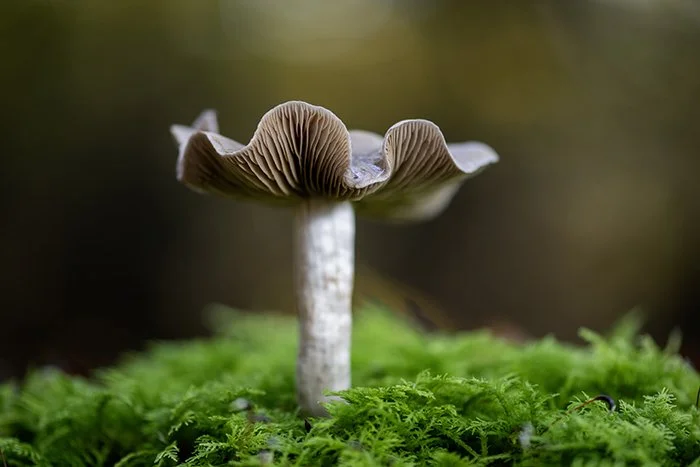
In recent decades, mycologists and mycophiles have worked to dispel the myths and misunderstandings that have historically maligned fungi. Many of those arose before we understood their ways. Yet misinformation around mushrooms persists, fuelled at times by a fetish for sensationalism and misguided perceptions of risk.
Ethnomycological knowledge has filtered down through generations of cultures around the world, across the millennia. A wide spectrum of species used as food and medicine, in rituals and more reflects the rich and contextualised understanding arising from direct observation and deep hanging out with fungi.

Graham St John
Terence McKenna was the 20th century’s psychedelic renaissance man. In this talk, we’ll squeeze into the back seat of McKenna’s 1997 tour of Australia. For a brief moment in Feb/Mar of that year, McKenna served as alien frontman for the Aussie experimental music underground. In our journey, we’ll explore the visitor’s enigmatic stature as a cult figure, novelty theorist, and psychedelic prophet with an untiring vision: that the clock is running down on history.

Mike Jay
Mescaline was the original psychedelic: the term was coined by Aldous Huxley and Humphry Osmond after Huxley's first trip in 1953. But it had already played many roles throughout history and around the globe. Since the 1890s its hallucinogenic properties had been described in detail by western scientists, artists and philosophers; and the cacti from which it was derived, peyote and huachuma (San Pedro), had been used in indigenous American cultures for millennia.
Mike Jay surveys mescaline's epic journey, and its impact across modernity from psychology to art, medicine to counterculture.
Neil Logan
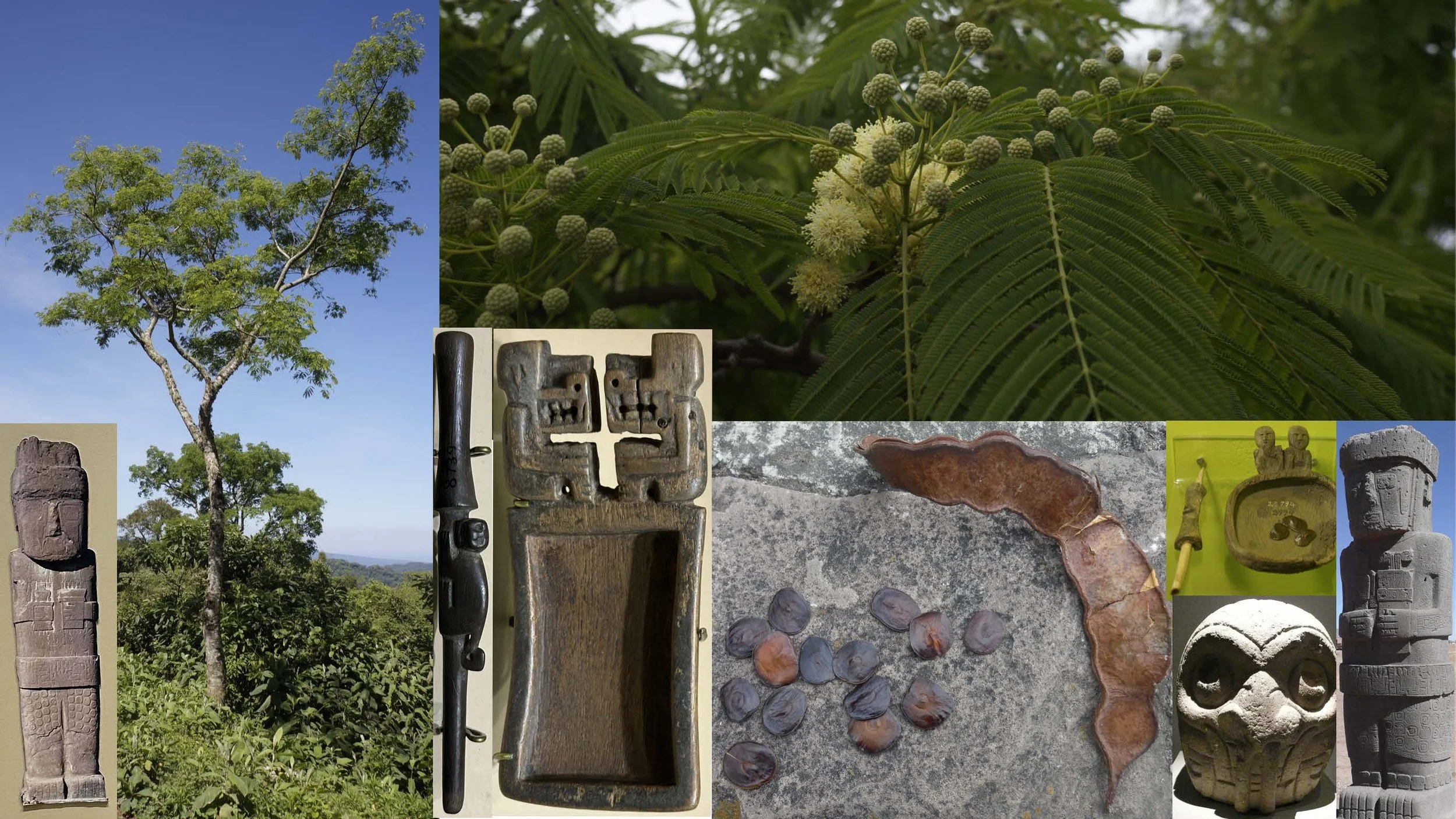
The genus Anadenanthera encompasses some of the most culturally and ecologically significant entheogenic trees of the Americas. With a long history of ritual use, these leguminous trees— closely related to Acacia and Mimosa—are native to the dry forests and savanna biomes of South America. Species such as A. peregrina (Yopo, Cojoba) and A. colubrina (Wilca, Cebil) have been implicated in ancient visionary practices and may even play a role in the early development of the ayahuasca complex.

Kathleen Harrison
This tender herb, known only from the mountains of southern Mexico, has a long-held persona and relationship to ritual. There, the Mazatec people of knowledge think of her as a being – tender, complex, and sometimes utterly confounding. One must learn to tend the plant, and the relationship to these powerful leaves. They can suddenly transport us beyond the beyond, or zoom in close to examine, with intimate clarity, one’s own origin.
This presenter’s talk will be delivered remotely via live stream or pre-recording.

C. Scott Taylor, PhD
An autobiographical tale narrated by a close witness to a curious life, this is meant to be a guided journey through my experience of the early days of psychedelic culture in the United States. I feel drawn to share. Some of these tales cannot be had again by anyone. Some are evidence of Dr Lilly’s “Earth Coincidence Control Office” hard at work.
I set out as a young fella to explore the range of possibilities of my mind, and to find others who were doing the same. It was a time of discovery. Boundaries unseen were discovered, crashed into, dissolved, and passed through… those left behind often had no idea where I went, or what life I had found on the other side. It was a liminal time, a time between realities in which there was loss and gain and change. I embraced it all.

Anna Ermakova
Lophophora williamsii (peyote) is a slow-growing, culturally significant cactus native to the Chihuahuan Desert and parts of South Texas and northern Mexico. It is currently facing conservation challenges due to pressures from habitat loss, land-use change and unsustainable harvesting for ceremonial and non-traditional uses.

Tehseen Noorani
It is an exciting time for psychedelic healing in Aotearoa New Zealand, with the first clinic for psilocybin-assisted therapy opening its doors in May 2025 and a first round of government guidance on how to apply to set up psychedelic clinics released in July 2025. There is also a growing call for Māori to be able to access endemic psychedelic mushrooms outside of controlled substances legislation.

James W. Sanders
This presentation will explore the rationale, results, and implications of our neurophenomenological, psychedelic studies with short acting tryptamines from the DMT Research Group at Imperial College London’s Centre for Psychedelic Research, and the UCL Centre for Consciousness Research. Just as modern particle colliders have advanced scientific perspectives on the underlying structure and qualities of our physical universe, our research operates under the rationale that psychedelic plants, molecules, and medicines are a vital tool for perturbing and studying human consciousness and its relationship to the brain.

Graham St John
Terence McKenna is among the most enigmatic figures in modern intellectual history. As both a hero of cognitive liberty and a persona non grata in the world of psychedelic science, McKenna’s reception has been ambivalent. A phenomenon in the networked underground on the one hand, a preposterous dilettante for serious thinkers on the other.
David Nickles
Over the past forty years, a core group of psychedelic advocates has made concerted efforts to mainstream psychedelics through the process of “turning psychedelics into medicine.” In pursuit of this goal of psychedelic medicalisation, its advocates have used a public relations strategy involving the promotion of “psychedelic science” as a discipline that explores the treatment of “treatment resistant conditions” as well as the resolution of international conflicts, climate change, and other existential crises.
C. Scott Taylor, PhD
This is a tale of synchronicities, revisiting unlikely intersections and new understandings. Once beyond family, late 60s, I was a free agent in a time of profound social change. I chose to take chances, to trust my intuition. When psychedelics came my way I was eager to explore. Not long on the ‘poison path’ I found a boundary to honour. I imposed a limit, committing to its use in natural surroundings, alone or with a supportive ally. My interest in psychedelics focused on ‘mind expansion’ and revelation, primarily using LSD and Peyote. I improvised a yoga practice of Asanas, study of esoteric texts, lightshows, and meditation.

Neil Logan
Ayahuasca brews are traditionally prepared with the leaves of Psychotria viridis or Diplopterys cabrerana, yet the latter has long been the subject of taxonomic confusion. Once thought to be synonymous with Banisteriopsis rusbyana, D. cabrerana has undergone decades of misidentification, conflation, and reclassification.

Anna-Leigh Hodge
Tū Wairua is a Māori Health Science collaboration led by Rangiwaho Marae, (Ngai Tāmanuhiri) in Te Tairāwhiti, Gisborne, Aotearoa (New Zealand). Tū Wairua embraces the reawakening and reclamation of sacred ceremony and ritual in healing to reconnect Māori collectively to the wider ecological and energetic systems in which we find ourselves misalignedfrom in the post-colonial world.

Sam Lasham
Background: Thousands of people use psilocybin (‘magic’) mushrooms annually in New Zealand, with around half of these people having used them to self-medicate mental health disorders. Use of psilocybin mushrooms risks drug-associated harm such as consumption of toxic or contaminated mushrooms, bad trips’, muscle paralysis, or hallucinogen persisting perception disorder.

Anna Ermakova
The phenomenon of "dream fish", i.e. marine species purported to induce hallucinogenic experiences when consumed, has intrigued ethnobiologists, toxicologists, and psychonauts for decades. This literature review synthesizes multidisciplinary research on species such as Sarpa salpa (commonly known as the “dreamfish”), various rabbitfish (Siganidae), and select members of the Kyphosidae and Mullidae families, all anecdotally associated with hallucinogenic effects in humans.
Rachel Payne MP, David Ettershank MP, and Michael Balderstone
The evolution and growth of the Legalise Cannabis movement in Australia, from grassroots activism to registered political entities.
The Legalise Cannabis Parties evolved from a grassroots movement that began in the '70s, with the founding of the Australian branch of NORML (National Organisation for the Reform of Marijuana Laws).

Harry Pack
In this talk, artist Harry Pack explores how creative expression can be a powerful tool for integrating altered states, supporting mental health, and deepening self-understanding. Drawing from his own journey, he shares how art has helped him make sense of visionary experiences and emotional healing.
He will introduce The Purple UFO, a collaborative platform that uses art as a bridge between inner transformation and community connection—bringing people together through shared creativity, nature-inspired practice, and open conversation around consciousness and integration.

David Nickles
Over the last two decades of participation in psychedelic spaces, David Nickles has contributed to a wide range of research, harm reduction, and advocacy projects relating to drugs, plants, and the people who use them. He has helped run the DMT-Nexus forum, collaborated on underground research projects (such as phytochemical analysis and connecting drug using populations with researchers interested in their experiences), contributed to harm reduction projects (including drug checking and peer support at live events), and worked to disseminate open source resources for developing sustainable, self-sufficient relationships with psychoactive materials.

Alex K. Gearin
When consuming ayahuasca, the usual sense of being located in a present distinct from the past and future can dissolve or stretch, giving rise to vivid encounters with multiple and alternating temporalities. In Amazonian cosmogenic myths and initiation rituals, ayahuasca has long been used to transport neophytes to the origins of life, inviting the presence of creator beings and planetary ancestors.
Digital Presentations
Kathleen Harrison
In the Big Picture, the fungi came first, and then the plants evolved, with their magnificent chemistry. Much later, we humans wove ourselves into their story. First tribal, then regional, and now global. We can look at this very long flow from distant past to far future, and consider where are we now.
This presenter’s talk will be delivered remotely via live stream or pre-recording.
Kathleen Harrison
This tender herb, known only from the mountains of southern Mexico, has a long-held persona and relationship to ritual. There, the Mazatec people of knowledge think of her as a being – tender, complex, and sometimes utterly confounding. One must learn to tend the plant, and the relationship to these powerful leaves. They can suddenly transport us beyond the beyond, or zoom in close to examine, with intimate clarity, one’s own origin.
This presenter’s talk will be delivered remotely via live stream or pre-recording.

Mark Pesce
Good news, everybody! Well at age 65? You're likely to make it to 90. Well at 50? You're likely to make it to 95 - and beyond. We have gained an incredible gift of 'time enough' - but are we ready?
A big study published last year showed a massive gap between lifespan and 'healthspan' - the number of years of 'good enough' health we enjoy. In Australia that gap runs to more than twelve years - and it's nearly as bad in New Zealand. Who wants to spend the last dozen years of their very long lives dreading their decline?
Australian Presentations

Jeremy J
Western Australia is among the oldest landmasses on Earth, home to an extraordinary diversity of Acacia species, with over 700 recognised variants predominantly concentrated in the biologically rich southwest. These wattles are deeply woven into the landscape, shaping regional ecology through complex interactions and remarkable adaptations to ancient, nutrient-poor soils and harsh climatic conditions.

Kirt Mallie
This presentation will explore the integration of the newly legislated field of psychedelic-assisted therapies within an Indigenous framework, centering Indigenous healing practices and ways of knowing, being, and doing. By acknowledging the profound wisdom that has guided the use of plant medicines within Indigenous knowledge systems for millennia, IPAT has developed a culturally responsive therapeutic model that fosters community healing and resilience.
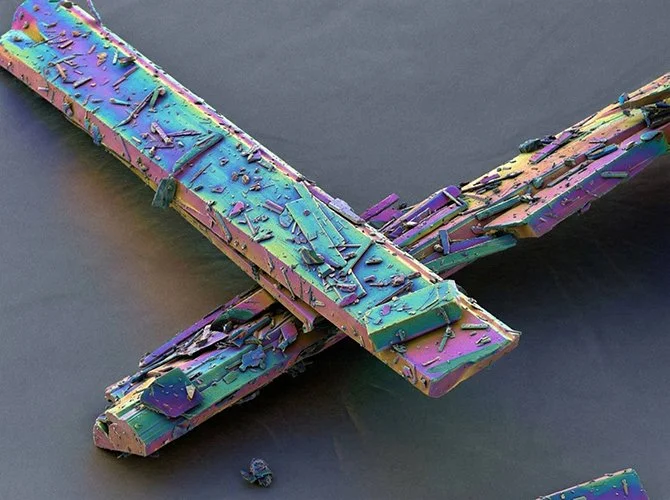
Daniel J. Siebert, discoverer of the hallucinogenic effects of salvinorin A, died in 2024. As one of the many researchers who built on his work, here I will pay tribute to his remarkable scientific discoveries. Siebert was a self-trained but rigorous scientist and a pioneering self-experimenter. He was one of the most significant figures in recent ethnopharmacology, and helped to spark the ongoing psychedelic renaissance.

Nigel Strauss
Can Psychedelics help us lead rich and meaningful lives? As a psychedelic researcher and therapist, Dr Nigel Strauss psychiatrist, has helped pioneer the current medicalisation of psychiatric substances in Australia for the treatment of psychiatric disorders. But he has also written extensively about the shadow side of this development.
Brooke Walters
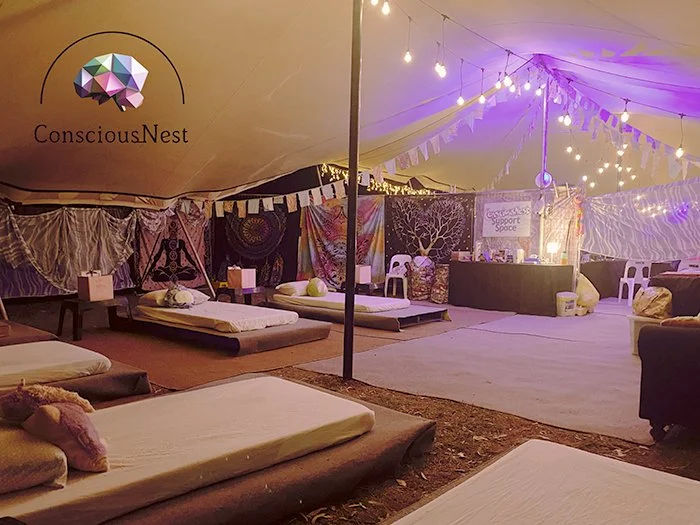
For more than a decade, ConsciousNest has been at the forefront of community-led harm reduction and psychedelic care within Queensland’s music-event landscape. Established in 2014 and sustained without government funding, ConsciousNest has evolved into one of Australia’s most recognised grassroots models for creating compassionate, safe, and evidence-informed care spaces at festivals and nightlife events.

Petra Skeffington and Dr Stephen Bright
This presentation will explore what we have learned through the lived experiences of individuals undergoing Psychedelic Assisted Psychotherapy about the suitability of these treatments in a range of different clinical and non-clinical settings. Our aim is not to advocate for one approach over the other, but to clarify the different roles that these therapies can play in healing, depending on the individual and their circumstances.

Jeremy J, Torsten Weidemann and Dr Adam J. Carroll
From alchemical elixirs to modern psychedelics, the pursuit of consciousness-altering substances has long followed the fragrant trail of the plant kingdom. This presentation explores the historical and biochemical lineage connecting alchemy, the distillation of botanical essences, and the development of psychedelic phenethylamine analogues based on the prototypical compound mescaline.
Vince Polito
There are currently roughly 100 new scientific papers published on psychedelics and other altered states of consciousness each week. There is broad agreement that these kinds of interventions can have considerable positive impacts on a broad range of mental and physical health conditions. And so a lot of these papers are focused on exploring these clinical outcomes – for example we see many graphs showing that levels of depression and anxiety drop after psychedelic assisted psychotherapy. However, across this booming scientific literature, there is surprisingly little information about what actually happens to participants’ state of consciousness during these interventions.

Lennard Garcia-de Heer
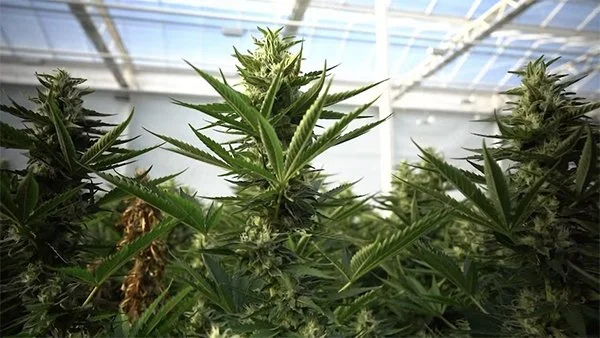
From single-digit THC percentages in the 70’s to modern varieties pushing 35% and beyond, Cannabis breeding is a rapidly developing space. Despite the incredible success of underground breeders, Cannabis development was stifled for a century.

Caine Barlow
The past decade has seen a significant turnaround in our understanding of the genus Psilocybe in Australia, with passionate citizen scientists contributing to a deepening understanding of ecology and distribution of many species.
This talk examines both well known species of Psilocybe, reviewing what we know, and discussing new species being found which have contributed to a dynamic picture of species over space and time.

Martin Williams
Psilocybin is a Schedule 1 Prohibited Substance in most parts of the world, but various jurisdictions are enabling access to psilocybin by one (or both) of two pathways: decriminalisation and legalisation. This talk will provide an overview of the current legal status and models of access to psilocybin in various countries, and the way forward in medical and non-clinical contexts.

Nen
This talk will look at some of the lesser-known but fairly common medicinal and psychoactive compounds in Acacia sensu lato (worldwide) which have important applications, barely yet explored by the scientific world. Also, we will look at the profound cultural/spiritual significance of these trees, which sets them apart from other kinds of healing or sacred plants.

Liam Engel
This lecture examines the cultural, legal, pharmacological, and conservation dimensions of mescaline-containing cacti, emphasising San Pedro (Trichocereus spp.), Peyote (Lophophora williamsii) and their chemical analysis using liquid chromatography–mass spectrometry (LC-MS).

Samuel Douglas
What happens after the dream dies? After it’s co-opted, diluted, and sold back to us in government-approved doses for those who can afford it, while those who can’t risk their freedom for a glimpse of transcendence? This talk is for those sitting with the weight of these questions.

Caine Barlow and Dr Simon Beck
Caine Barlow and Dr Simon Beck ran a citizen-science survey aiming to provide the first systematic description of the “wood-lover paralysis” phenomenon and try to identify any clear factors that might predict or explain the seemingly random nature of its occurrence. Join them to learn about the findings, their thoughts on several theories about the phenomenon, their experience of trying to undertake the research, observations on the spread of (mis)information and their harm reduction advice.

Mohammad Reza Mirzadeh
Psilocin, psilocybin and the associated tryptamines are psychoactive alkaloids which are naturally synthesised by Psilocybe (Fr.) P.Kumm. fungi, commonly referred to as magic mushrooms. These psychoactive fungi were and may still be used in traditional healing rituals, particularly by certain ethnic groups for mental healing, influencing modern psychedelic studies. Since these substances are intermittently determined in analytical laboratories, validated methods for fast, accurate and reliable analysis are in demand.

Jef Baker
This presentation will explore the unique features of Changa, its advantages as a method of DMT consumption and its justified moniker as ‘smokeable ayahuasca’. Utilising what existing academic literature there is, recent books, online articles and anecdotal reports from internet forums, the aim here is to present the multifaceted nature of Changa. I intend to draw on evidence to highlight the versatility, integrate-ability, navigate ability and experiential qualities of Changa that make it uniquely suited for entheogenic exploration and a novel development in the pantheon of ethnobotanical techniques.

Martin Williams and Rich Haridy
A scientist and a journalist sit down for an informal chat about psychedelics, science, modern medicine and everything in between. Martin Williams has been immersed in the world of pharmacological research for decades, working most recently on several psychedelic clinical trials in Australia. Rich Haridy has been reporting on the world of psychedelic science for nearly ten years.

This presentation reflects on Fahim’s journeys through Peru, Bolivia, and Argentina in search of new and exceptional Trichocereus varieties, particularly T. peruvianus, T. pachanoi, T. bridgesii, and T. terscheckii. Trekking across the Andes Mountains, Fahim documented striking wild specimens growing in their native habitats, capturing their ecological diversity, form, and resilience in situ.

Nick Sun
As you may have noticed, reality has become an exponential shitshow in the last five years with all manner of destabilising events and influences that have made many of us question the very fabric of a once shared consensus reality. Never before have we faced such a number of varied and largely man-made existential threats to our survival as a species. Climate change, AI, political corruption, economic instability, pandemics, the sixth mass extinction, social media, information warfare, nuclear arms threat, the list goes on.

Snu Voogelbreinder
The region known today as the Middle East has a rich history, birthing streams of culture, religion and civilization that have helped form the modern world, and psychoactive plants have played a large role in the background.
Discussions around the use of psychoactive plants in the region are usually historical and focused mainly on their relation to Judaeo-Christian scriptures and traditions. In this presentation we will go further and explore other uses of plants and fungi amongst the diverse cultures of the region, both historic and contemporary.

As psychedelic-assisted therapy (PAT) moves from the fringes to the centre of clinical practice, we find ourselves at a pivotal moment in shaping the future of this field. While the adoption of PAT into conventional healthcare settings brings welcome legitimacy, it also raises important questions about how we measure outcomes and define therapeutic success.

Prashanth Puspanathan
Despite promising evidence for psychedelic-assisted therapy (PAT) in treating mental health conditions, its accessibility remains severely limited. Current delivery models are constrained by high costs, siloed clinics, and inefficiencies that limit scalability. This talk will outline the evolution of psychedelic therapy to date, its current limitations, and present a possible solution that is currently being explored in a clinical trial at Monash University.
We take a closer look at one key barrier: cost. Delivering PAT in specialist clinics with intensive therapist time results in a prohibitive cost structure, often overlooked in discussions about feasibility. Through financial analysis, we will highlight why addressing this structural inefficiency is critical for making PAT accessible.

Thomas Forrest
An overview of the current medicinal cannabis agricultural landscape, covering nursery (propagation) through to patient access. This talk will explore my experiences setting up a legal farm, developing our own genetics and supplying cannabis medicines into the worldwide market.
This talk will explore the different approaches to cannabis agricultural science, regulations, environmental impact and potential evolution in the AU/NZ cannabis sector.